
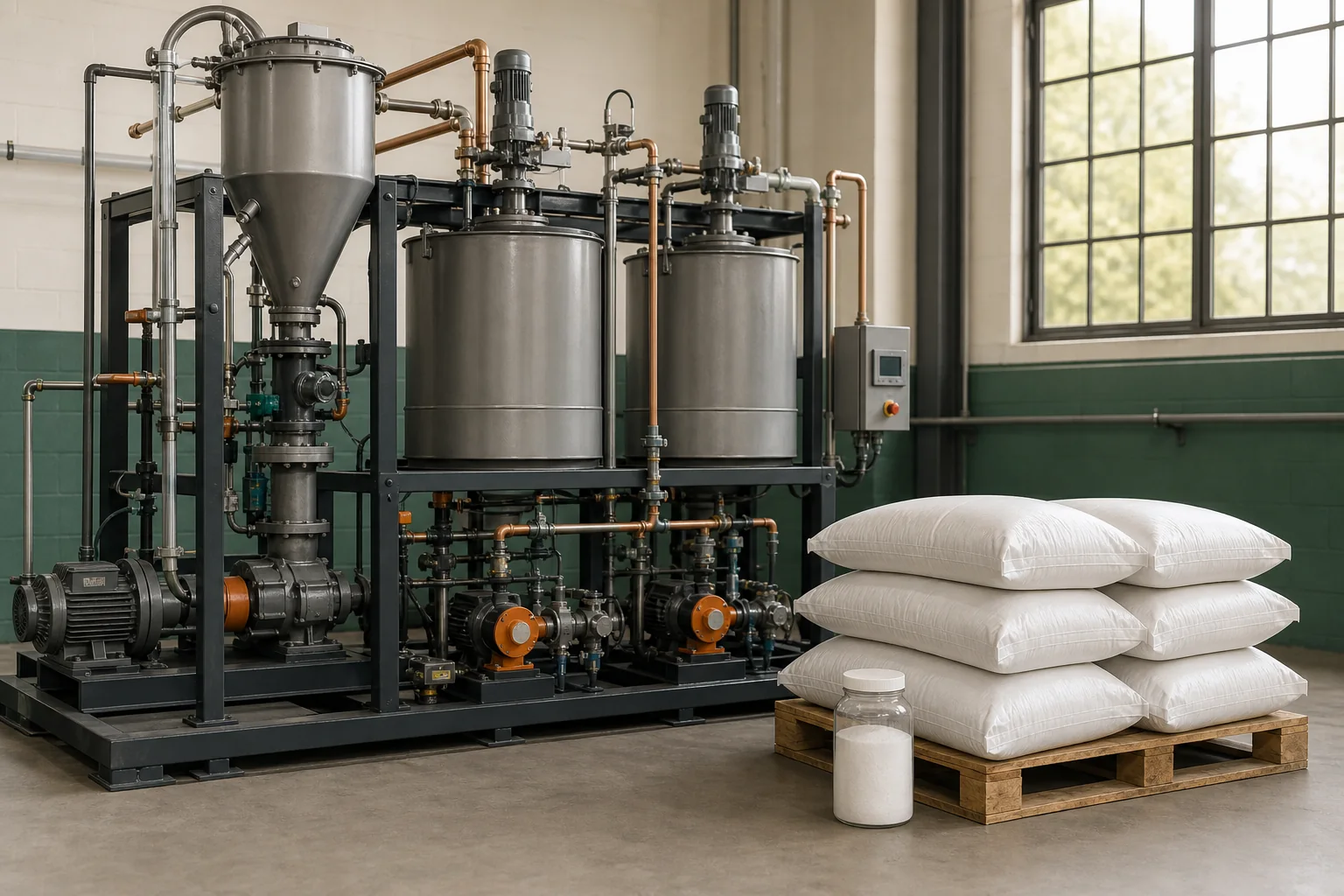
Incoming checks protect a qualified anionic PAM order. They should distinguish product identity, physical condition and application response instead of treating a COA as the entire release decision. Keep disputed material and its evidence traceable before it enters the preparation system.
Match the delivered identity to the order
Check the approved product code, lot marking and accompanying documents. Keep samples linked to their original container and record how they were collected. A different grade is not qualified merely because its bag also says anionic polyacrylamide. Use the supplier-change process for a substantive substitution. Receiving inspection and application approval have different purposes.
Inspect condition and handling exposure
Observe package integrity, visible caking and relevant moisture history under the plant procedure. Confirm protected unloading and storage before opening material. Free-flowing appearance is not proof of treatment performance, while damaged handling can compromise a qualified product. Record discrepancies and follow the agreed hold or release process. Do not make identity harder to investigate by mixing an unresolved lot into approved stock.
Interpret documented values consistently
Review agreed batch values with their methods and conditions. TDS characteristics are not automatically the same as batch release limits. An SDS addresses handling rather than separation performance. Compare numerical values only where concentration, water, temperature and instrument conditions are meaningful. The quality and supply record keeps those documentary purposes separate from the actual slurry trial and accepted dose window.
Use a reference comparison when justified
For a sensitive duty, compare the received material with an identifiable retained reference on the same representative feed and preparation. A changed result should prompt investigation of water, feed, concentration and calibration before a cause is assigned. Do not assume every deviation proves a defective lot. Record the reviewer, evidence and release decision so later consumption can be linked to a clear technical and receiving history.
Record the purchase decision
Complete the following checks with actual measurements, observations or an agreed document reference. Keep an untested condition visible as a limitation rather than assuming equivalence. The candidate code, sample identity and trial method must remain attached to the decision so purchasing and operations approve the same product and duty.
| Check | Evidence | Order decision |
|---|---|---|
| Identity | Approved code, lot and shipment documents | Unreviewed substitution is not consumed by default |
| Condition | Package and moisture observations | Material remains suitable for preparation |
| Response | Proportionate paired reference evidence | Release or hold has an interpretable basis |
Send a useful sample and quotation enquiry
Provide the approved and received product identifiers, lot and precise discrepancy. Include relevant test methods and paired preparation data where performance changed. State any feed, water or equipment change during the same period instead of presenting the lot as the only possible cause.
Include quantity, packaging preference and destination separately from the technical approval. Use the anionic PAM sample worksheet to define the candidate screen and confirm quality documents and delivered supply scope for the selected identity. Gongyi Xinqi Polymer Co., Ltd. can review the requirements. Availability, commercial terms and application suitability require confirmation; a process name does not establish a universal dose or guaranteed operating result.
Request a focused sample review
Send solids, water, separator and purchasing requirements for this duty.