
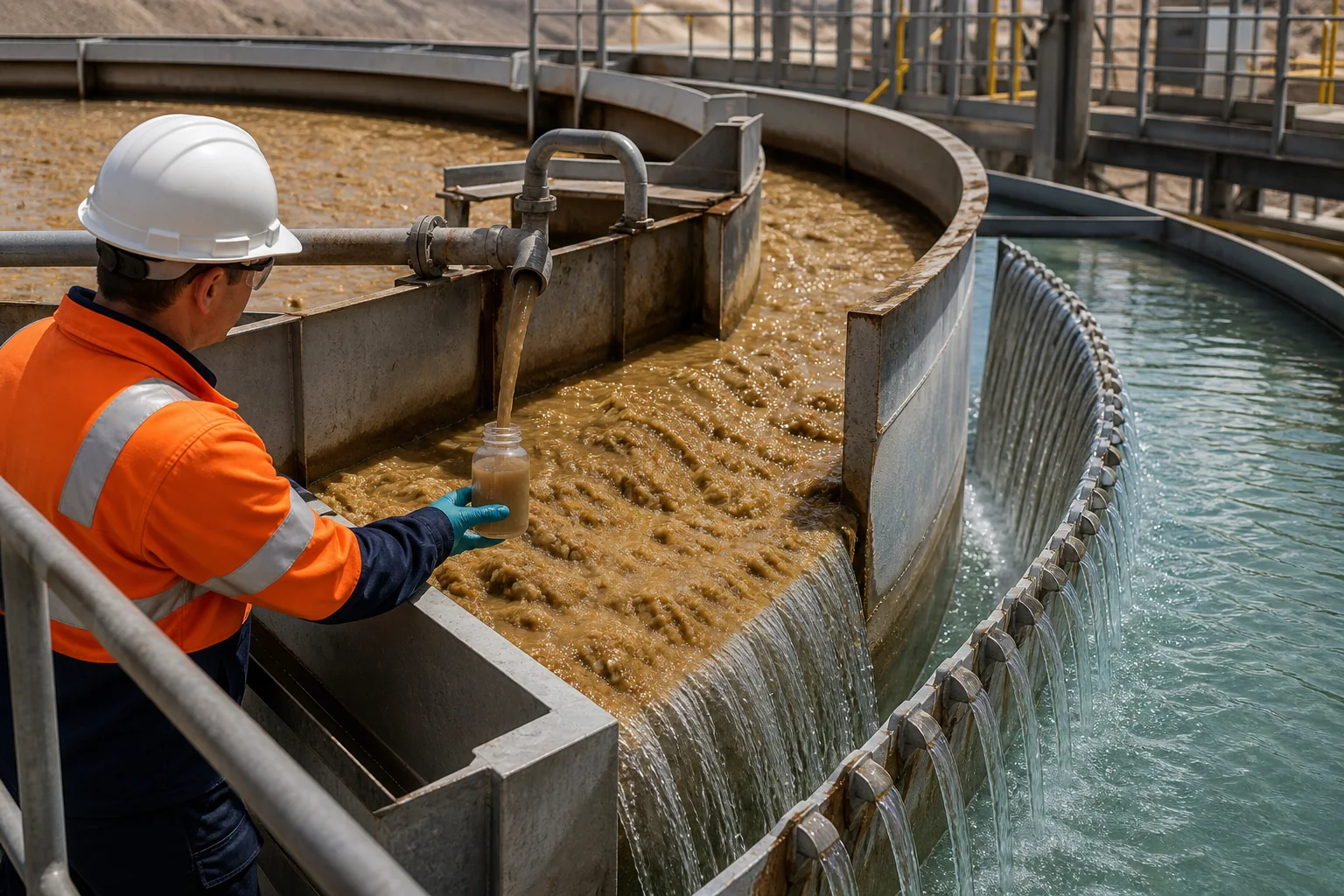
An iron-ore tailings purchase should describe the separation stream, not only the mine product. Fine solids, clay and water chemistry can change between campaigns. A useful anionic PAM sample request defines the actual thickening or clarification duty and the downstream handling constraint.
Identify the tailings rather than the ore name alone
Provide the sampling point, solids range and particle information available from the plant. Explain whether washing, beneficiation or another process generates the stream and which reagents remain relevant. Keep normal recycled water represented. Avoid assuming that a polymer used at another iron-ore operation is equivalent without comparable feed evidence. The mineral label is context for a candidate shortlist, not an application approval.
Compare adjacent candidates on one feed
Use a well-controlled splitting method and preparation record. Test a dose range against the present product where an identifiable reference exists. Observe settling, supernatant quality and final compaction rather than one isolated interface reading. The solids and water selection guide helps keep ionic response and molecular characteristics separate from an unexplained marketing description.
Include transfer and the downstream separator
Assess whether the floc survives the path into the thickener or filter. Record underflow behaviour and the filter cycle where the solids proceed to dewatering. Fast settling can lose its value if the resulting material is difficult to pump or filter. Use filtration acceptance criteria where applicable. A beaker result should not be quoted as a guaranteed plant throughput or cake condition.
Preserve evidence for repeat purchasing
Write down the candidate identity, water, preparation, successful dose range and acceptance measurements. Include ore or fines changes that remain outside the test. Normalize demand using measured solids loading and a clear product or active basis. Confirm packages, lot documents and delivered quotation scope for the selected grade. When the feed changes materially, qualify the new condition rather than silently extend the former result.
Record the purchase decision
Complete the following checks with actual measurements, observations or an agreed document reference. Keep an untested condition visible as a limitation rather than assuming equivalence. The candidate code, sample identity and trial method must remain attached to the decision so purchasing and operations approve the same product and duty.
| Check | Evidence | Order decision |
|---|---|---|
| Feed | Tailings origin, fines and recycled-water record | Sample matches the product duty |
| Response | Dose curve, settling and compaction | Advantage is reproducible against a reference |
| Handling | Transfer, underflow and filter observations | Selection covers the next solids-handling step |
Send a useful sample and quotation enquiry
Send the iron-ore tailings point, solids and fines range, water condition, reagents and installed separator. Include current grade and the full result of a paired comparison. Specify whether the commercial order is for a first machine trial or an already approved repeat-supply duty.
Include quantity, packaging preference and destination separately from the technical approval. Use the anionic PAM sample worksheet to define the candidate screen and confirm quality documents and delivered supply scope for the selected identity. Gongyi Xinqi Polymer Co., Ltd. can review the requirements. Availability, commercial terms and application suitability require confirmation; a process name does not establish a universal dose or guaranteed operating result.
Request a focused sample review
Send solids, water, separator and purchasing requirements for this duty.