
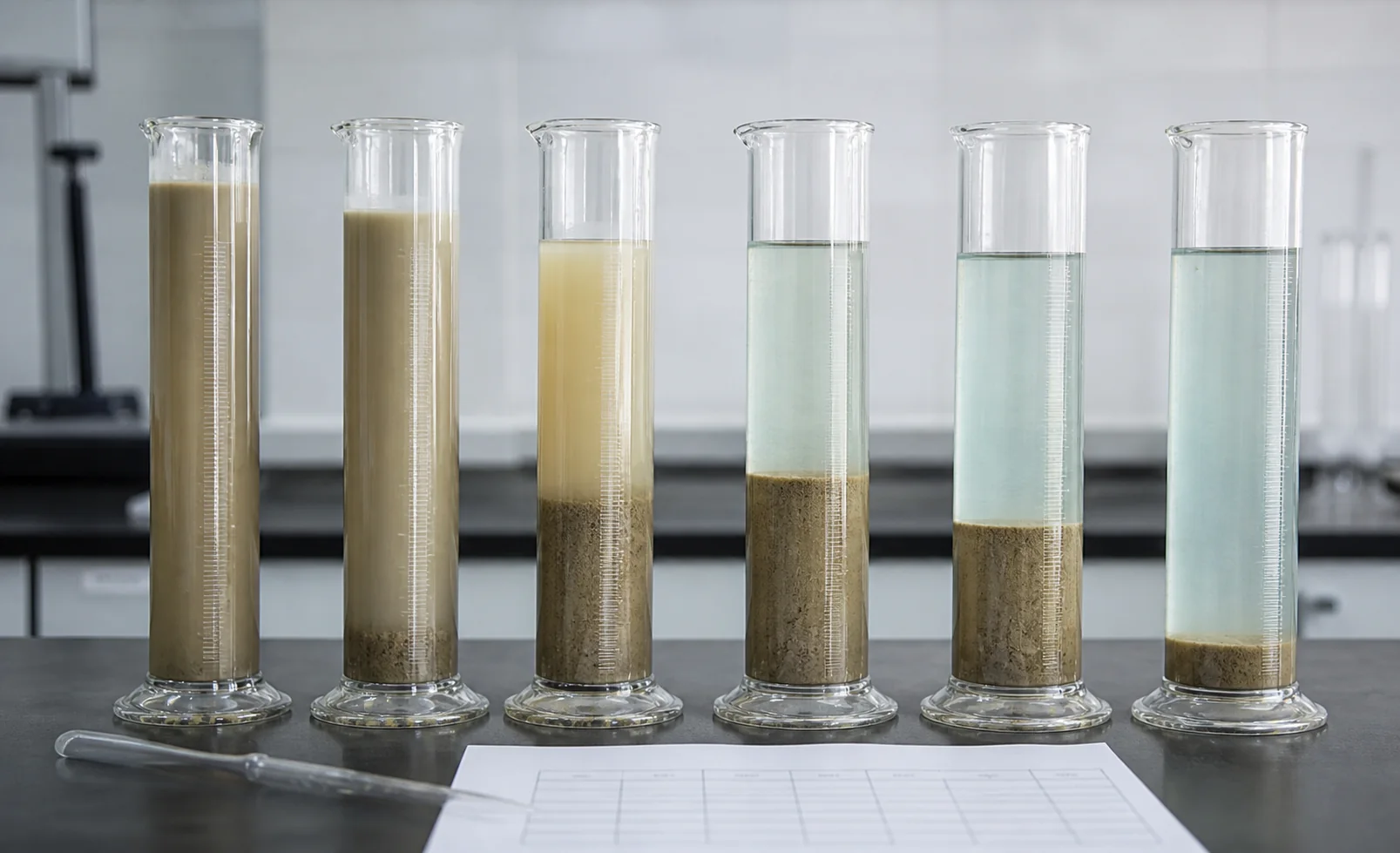
A focused sample request describes the solids, water and separator before product codes are assigned. The information below helps narrow the first test set and prevents a generic shipment that cannot answer the plant decision.
Describe the feed
Provide mineral, aggregate or industrial process; particle or precipitate type; solids concentration; pH; conductivity or hardness; temperature; and relevant dissolved constituents or process reagents. State whether the sample represents average or difficult operation.
Describe the separation objective
Identify clarifier, thickener, settling pond, filter or other equipment. Record flow or solids flux, residence, current polymer and coagulant, active dose where known, overflow or filtrate target, underflow or cake target and the constraint that controls value.
Plan the comparison
Prepare candidates with consistent water, concentration, maturation and age. Compare active dose, include underdose and overdose, use repeatable mixing and define stabilization time before plant samples are collected. Retain the blank and present-product baseline.
Complete commercial details
Include estimated monthly demand, product form, packaging preference, destination, Incoterm and required documents. Enquiry details are sent directly to Xinqi Polymer technical sales for product selection, sample coordination and quotation.
Additional checks before purchasing
Use the relevant application or supply requirements below with the measured product comparison:
- Anionic PAM for Existing Dosing Systems: Purchasing Compatibility
- Anionic PAM Tender Specification: Product and Trial Requirements
- Anionic PAM Supplier Change: From Sample to Approved Order
- Anionic PAM Incoming-Lot Checks: Identity, Condition and Response
Application-based sample request
Put the feed evidence on one sheet.
Include the solids, water chemistry, separator, current treatment, operating target, quantity and destination.