
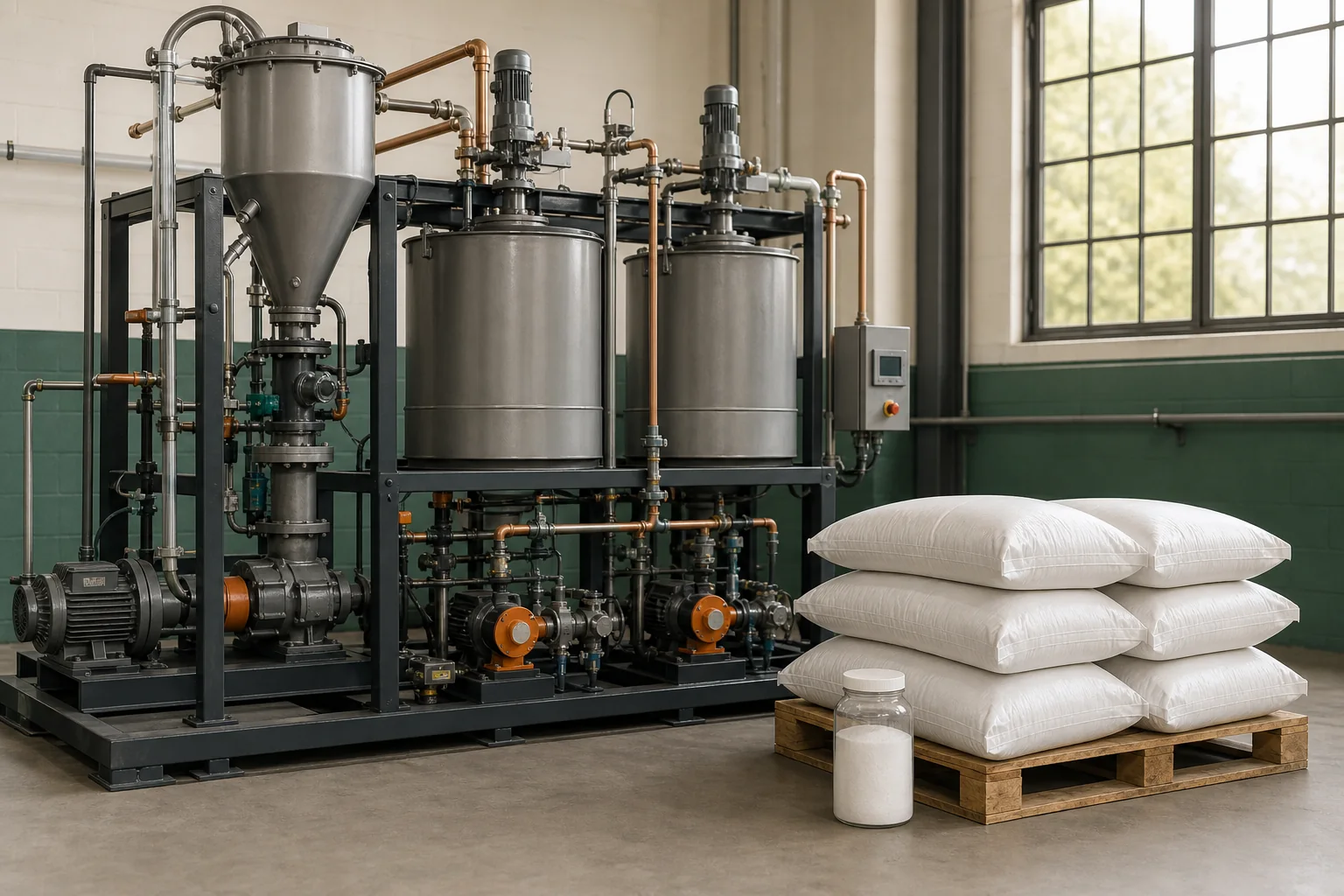
A polymer that ranks first for tailings settling may not rank first for a filter press. Filtration needs a permeable conditioned feed, useful capture and manageable cake. Purchase a candidate from the actual pressure-filtration duty rather than transfer a clarification approval without evidence.
Define the press feed and cycle
Describe whether the feed is direct slurry or thickened underflow. Record solids range, relevant water and upstream chemicals, press type and practical cycle information. Keep cloth condition and other mechanical constraints visible. Polymer cannot be ranked fairly when each candidate sees a different feed or an unexplained maintenance change. Define the main acceptance endpoint before requesting a sample set.
Use a filtration-specific candidate screen
Prepare reference and candidates with controlled conditions and dose. Compare filtrate quality and water release under a meaningful screening method, acknowledging the differences from the installed machine. Observe whether conditioning survives transfer. The filtration-grade path explains why visible floc size and settling alone are insufficient. Do not claim a guaranteed cake condition from a bench filter observation.
Measure the whole press result
Record the relevant fill and filtration progression, filtrate solids, cake condition, discharge and cloth-cleaning behaviour during a controlled plant trial. A short early drainage benefit may lose value if the final cycle or release worsens. Keep capture and throughput in the balance. Where the candidate requires a different preparation or injection arrangement, evaluate that change explicitly rather than hide it in an apparently lower dose.
Compare useful cost before committing to supply
Normalize actual product consumption using the verified solids load and commercial mass basis. Include relevant cycle, wash-water and solids-handling consequences when measured. The slurry-flow dose guide helps prevent unit errors. Approve a specific candidate, method and feed range, then require repeat deliveries to preserve the product identity and relevant lot records.
Record the purchase decision
Complete the following checks with actual measurements, observations or an agreed document reference. Keep an untested condition visible as a limitation rather than assuming equivalence. The candidate code, sample identity and trial method must remain attached to the decision so purchasing and operations approve the same product and duty.
| Check | Evidence | Order decision |
|---|---|---|
| Press duty | Direct or thickened feed and actual cycle | Trial targets filtration, not only settling |
| Complete result | Filtrate, cycle, cake and cloth observations | Selected grade balances the full press duty |
| Supply approval | Verified consumption and product identity | Quotation matches the tested candidate and method |
Send a useful sample and quotation enquiry
Send tailings origin, press feed solids, water chemistry, upstream treatment, current grade and preparation. Include the filtration cycle, filtrate and cake acceptance measurements. State whether the trial is replacing an incumbent or adding conditioning to a previously unqualified filtration stage.
Include quantity, packaging preference and destination separately from the technical approval. Use the anionic PAM sample worksheet to define the candidate screen and confirm quality documents and delivered supply scope for the selected identity. Gongyi Xinqi Polymer Co., Ltd. can review the requirements. Availability, commercial terms and application suitability require confirmation; a process name does not establish a universal dose or guaranteed operating result.
Request a focused sample review
Send solids, water, separator and purchasing requirements for this duty.