
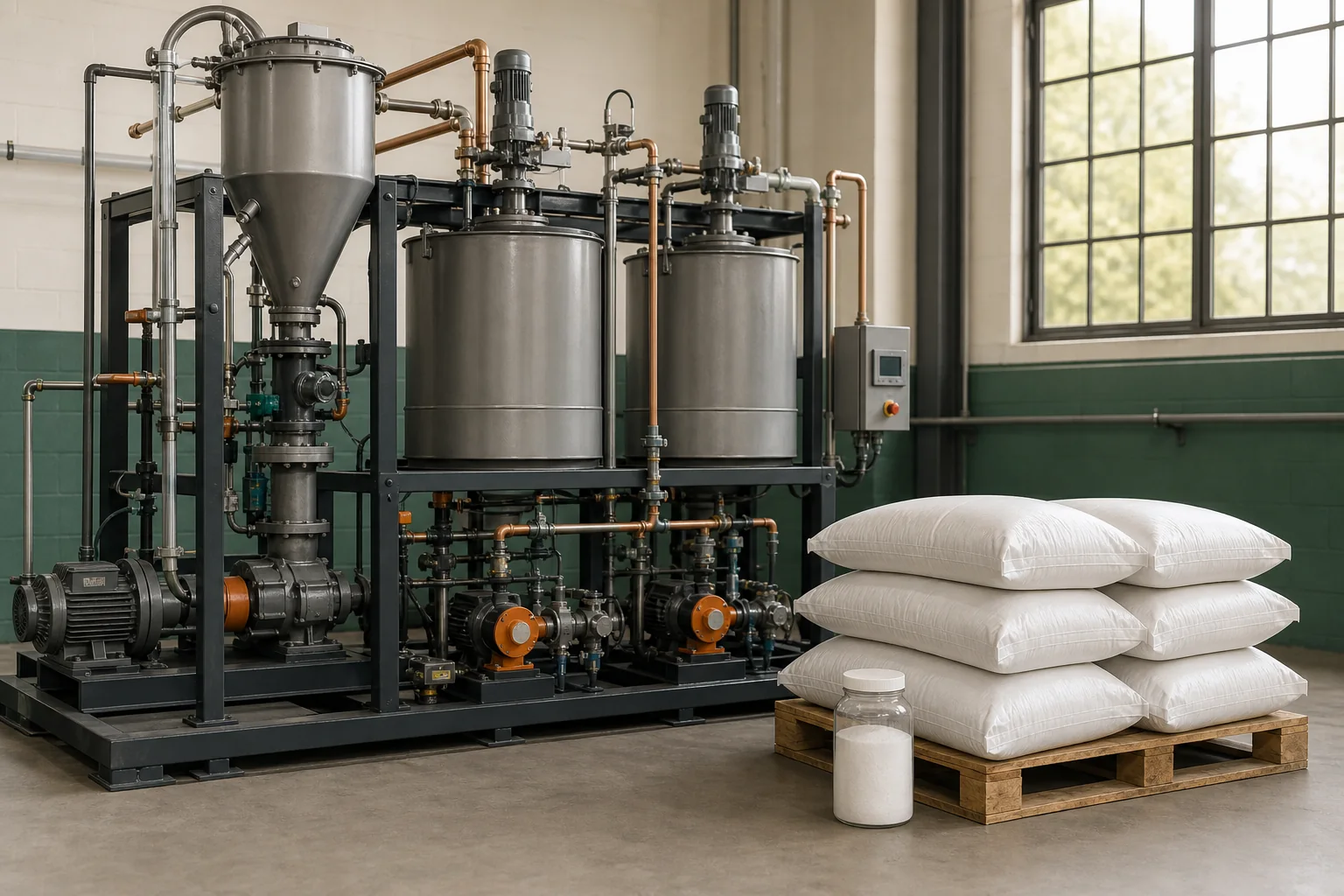
Packaging is part of an anionic PAM purchasing decision because the plant must transfer a qualified product into preparation reliably. A different bag or container can change unloading and exposure without changing the chemical code. Confirm the handling route before accepting a cheaper package format.
Describe unloading and transfer equipment
Provide the package sizes and methods the site can handle safely, including storage and the route into the hopper. Consult equipment and site procedures about required dimensions, lifting or transfer arrangements. Do not assume that every bulk format fits an existing system. A freight saving is not an equivalent commercial advantage if it requires an unreviewed handling conversion or exposes powder unnecessarily.
Keep powder protected and identifiable
Review covered unloading, moisture exposure, storage rotation and partially opened packages. Follow the selected supplier’s guidance rather than invent a universal humidity or storage-life value. Keep product and lot markings readable through use. Document how retained samples relate to the delivery. The receiving checklist provides the identity and condition checks needed before material is released.
Verify feeding and useful preparation
Package compatibility does not prove that the powder feeds correctly at the incumbent setting. Measure mass addition safely and keep water flow, wetting and aging controlled. The dosing-system review connects transfer with usable solution and measured dose. Follow SDS and equipment procedures for spills and cleaning; do not improvise around operating feeders to keep a product trial moving.
Quote the actual package and order period
Specify approved grade, quantity, destination and package method together. Confirm marks, delivered scope and supplier-acknowledged timing. Size stock against protected capacity and realistic consumption. A delivery should not change from the agreed format without review if that affects operation. Preserve the approved preparation and treatment evidence: packaging convenience alone does not qualify a different polymer product or a larger untested operating range.
Record the purchase decision
Complete the following checks with actual measurements, observations or an agreed document reference. Keep an untested condition visible as a limitation rather than assuming equivalence. The candidate code, sample identity and trial method must remain attached to the decision so purchasing and operations approve the same product and duty.
| Check | Evidence | Order decision |
|---|---|---|
| Transfer fit | Actual package and unloading arrangement | Format is compatible with site equipment |
| Protection | Storage, exposure and readable lot identity | Delivery can remain traceable and usable |
| Preparation | Measured powder addition and solution method | Handling change does not distort dose or hydration |
Send a useful sample and quotation enquiry
Send the approved grade, package-transfer arrangement, feeder configuration, protected storage and use rate. Include dimensions or constraints supplied by the equipment team. State whether an alternate format is merely being quoted or has already been reviewed for the actual unloading and preparation route.
Include quantity, packaging preference and destination separately from the technical approval. Use the anionic PAM sample worksheet to define the candidate screen and confirm quality documents and delivered supply scope for the selected identity. Gongyi Xinqi Polymer Co., Ltd. can review the requirements. Availability, commercial terms and application suitability require confirmation; a process name does not establish a universal dose or guaranteed operating result.
Request a focused sample review
Send solids, water, separator and purchasing requirements for this duty.