
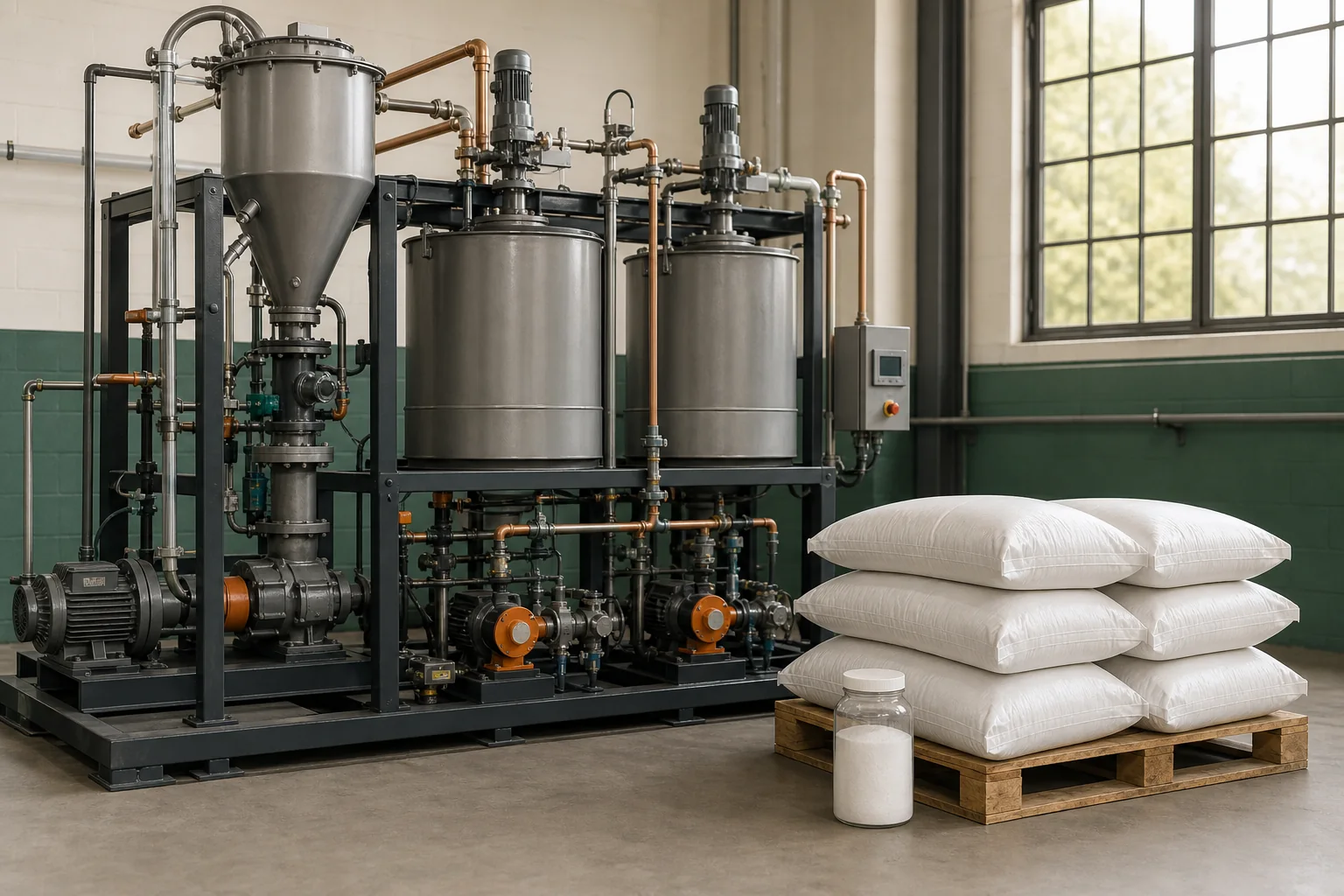
Bulk anionic PAM prices are comparable only when the candidate identity and commercial scope are defined. A low price per kilogram can be outweighed by consumption or preparation constraints. Establish application approval, then compare the useful delivered cost rather than a generic polymer price.
Identify the product behind the quoted price
Ask for candidate code, form and relevant technical documents. Confirm whether the quotation covers a tested grade or an unqualified sample proposal. Active-polymer basis and as-supplied product mass should not be treated as identical without confirmed information. Do not invent a standard active fraction to force two offers into one comparison. If product form changes, document the preparation route and conversion required.
Normalize consumption using compatible units
For product dose in kilograms per dry metric ton, multiply verified product consumption by delivered price per kilogram. If the technical result reports active dose, convert it using confirmed product information before using a total-product price. Keep the relevant flow or solids basis stated. The slurry dose calculation helps identify percent, density and time-unit errors that can materially distort the quotation comparison.
Clarify what delivery includes
State quantity, destination, packaging and requested commercial scope. Obtain supplier confirmation of included freight, handling or other charges rather than assume bulk pricing means arrival at the plant. Check package transfer into the feeder and safe unloading arrangements. Supplier availability and dispatch timing need confirmation for the selected grade. A product listing alone does not establish that a particular quantity or lot is reserved.
Order only usable and qualified stock
Size shipment against normal consumption, variation and protected storage. Confirm supplier storage and remaining shelf-life information where relevant. Separate forecasts from firm commitments. Review supplier-change acceptance before converting a promising sample into a large order. The commercial advantage is meaningful only when product, quantity and preparation remain within the demonstrated operating duty.
Record the purchase decision
Complete the following checks with actual measurements, observations or an agreed document reference. Keep an untested condition visible as a limitation rather than assuming equivalence. The candidate code, sample identity and trial method must remain attached to the decision so purchasing and operations approve the same product and duty.
| Check | Evidence | Order decision |
|---|---|---|
| Price basis | Approved code and documented product/active relationship | Units are compatible with verified consumption |
| Delivered scope | Destination, package and included charges | Offers describe comparable services |
| Order size | Consumption, storage and technical approval | Bulk quantity can be used as intended |
Send a useful sample and quotation enquiry
Send the qualified candidate, actual consumption basis, monthly demand range, package handling and destination. Distinguish a first trial order from repeat bulk supply. Ask each supplier to identify product code and delivered quotation scope explicitly so a price difference has an explainable basis.
Include quantity, packaging preference and destination separately from the technical approval. Use the anionic PAM sample worksheet to define the candidate screen and confirm quality documents and delivered supply scope for the selected identity. Gongyi Xinqi Polymer Co., Ltd. can review the requirements. Availability, commercial terms and application suitability require confirmation; a process name does not establish a universal dose or guaranteed operating result.
Request a focused sample review
Send solids, water, separator and purchasing requirements for this duty.