
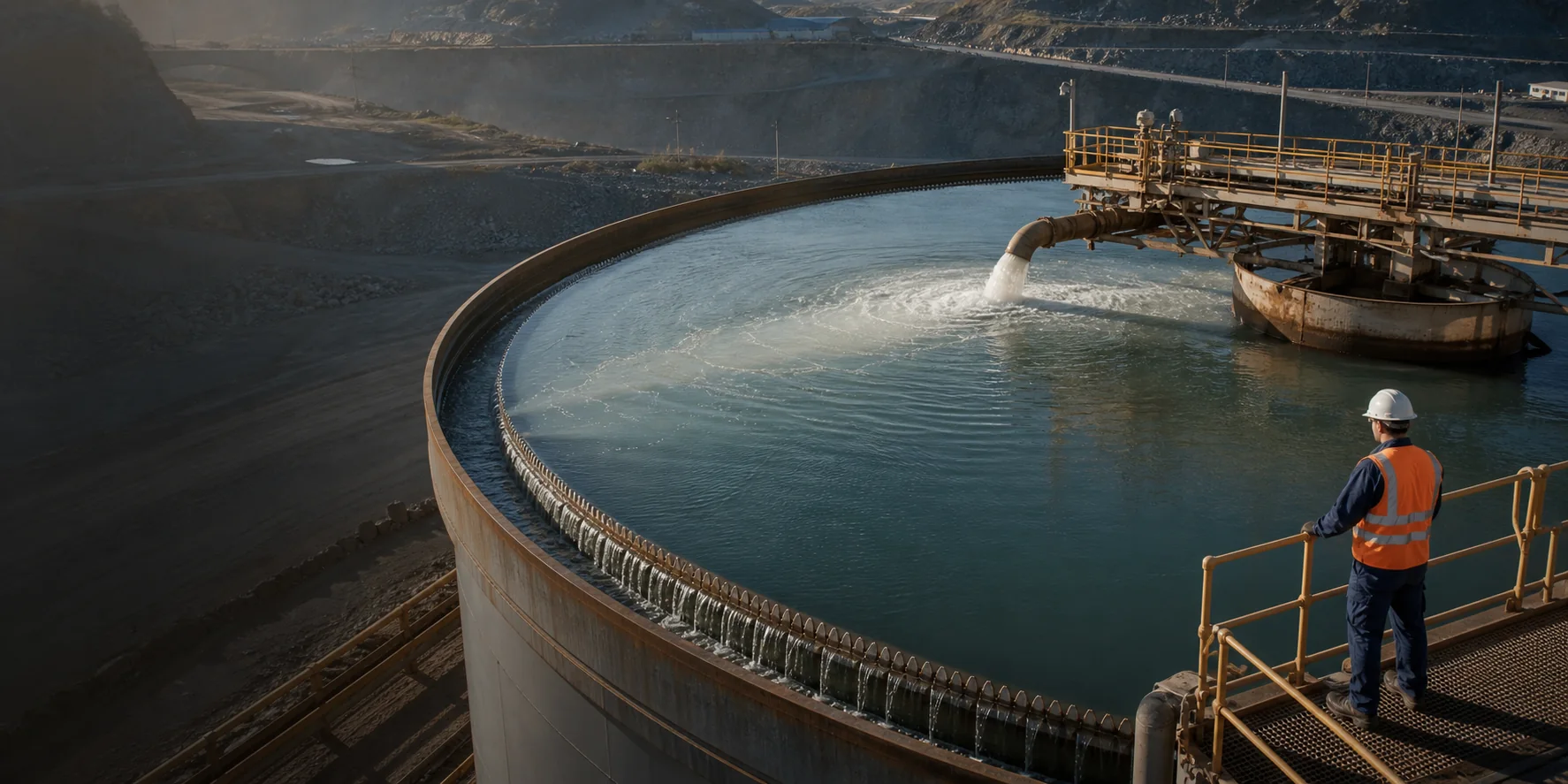
Copper-tailings flocculant selection needs the actual tailings and recycled-water condition. Ore changes and residual process reagents can alter response. Buy a candidate against measured thickener outcomes, not a claim that a high-molecular-weight anionic label automatically improves every copper circuit.
Describe the sampled circuit
Record the tailings point, solids concentration, fines or clay information and relevant upstream reagents. Include water chemistry and expected ore-campaign variation. A settled sample that loses fines can misrepresent the treatment demand. Keep collection and handling documented so the supplier knows whether the material reflects normal or difficult operation. Do not substitute an unqualified water or ore sample merely because it is easier to obtain.
Use a controlled thickening comparison
Prepare the incumbent and candidates with defined water, concentration and aging. Compare a meaningful dose range on a consistent mass basis. Measure settling interface, overflow solids and compaction, with representative transfer or shear observations where relevant. The settling-test guide separates a shortlist from plant qualification. Hold coagulant or other upstream changes fixed while determining whether the polymer itself produced an advantage.
Check underflow and recycled-water consequences
At the machine, assess overflow quality, bed or rake condition, underflow density and practical pumping alongside throughput. Clear appearance alone does not establish that all dissolved chemistry is suitable for reuse upstream. Agree which circuit measurements matter to the plant. The thickening-grade path keeps compaction and handling in the decision, rather than approving the candidate from the fastest visible settling alone.
Connect the accepted trial to supply
State the approved product, tested feed range, preparation and dose window in the order record. Estimate quantity from dry-solids loading using the appropriate conversion and measurement quality. Include retained-sample and lot-document requirements. If the supply period spans different ore campaigns, review whether the comparison covers them. No candidate recommendation should be treated as a guarantee of metallurgical recovery, tailings-facility performance or unrestricted water reuse.
Record the purchase decision
Complete the following checks with actual measurements, observations or an agreed document reference. Keep an untested condition visible as a limitation rather than assuming equivalence. The candidate code, sample identity and trial method must remain attached to the decision so purchasing and operations approve the same product and duty.
| Check | Evidence | Order decision |
|---|---|---|
| Circuit | Tailings identity and residual reagent record | Candidate is screened on relevant feed |
| Thickener | Overflow, underflow and machine evidence | Accepted window covers the stated operating duty |
| Supply period | Ore range and demand basis | Order does not extend beyond its qualification |
Send a useful sample and quotation enquiry
Provide tailings source, normal and difficult ore conditions, solids, water data, upstream chemicals and thickener measurements. Include current grade, preparation and active-dose basis. Explain whether a filter follows the thickener and which reuse constraints affect the value of recovered water.
Include quantity, packaging preference and destination separately from the technical approval. Use the anionic PAM sample worksheet to define the candidate screen and confirm quality documents and delivered supply scope for the selected identity. Gongyi Xinqi Polymer Co., Ltd. can review the requirements. Availability, commercial terms and application suitability require confirmation; a process name does not establish a universal dose or guaranteed operating result.
Request a focused sample review
Send solids, water, separator and purchasing requirements for this duty.