
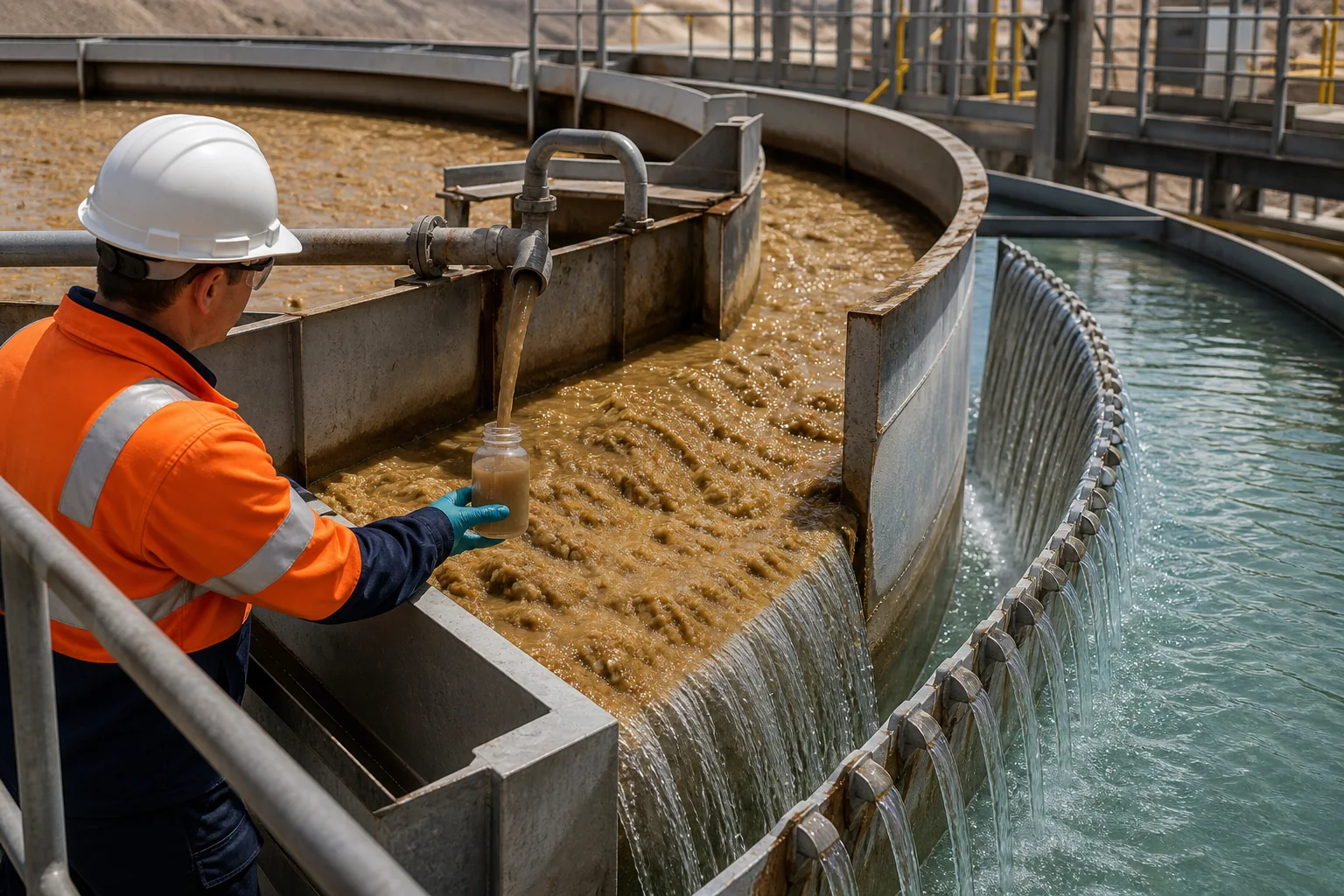
A paste-thickening objective is not qualified merely by selecting a powder described as high molecular weight. Settling, compaction and the practical underflow response must be evaluated together. Some duties require a specialized candidate review, and an ordinary anionic PAM label does not establish equivalence.
Define the underflow objective explicitly
Record the actual equipment, feed range and the solids or handling endpoint that governs operation. Include relevant rheology or pumping information supplied by the responsible plant team. Distinguish a measured requirement from an aspirational target. A candidate that makes a fast interface may behave differently after substantial compaction. Provide the whole duty so the supplier does not propose a product solely for improving initial clarification.
Screen architecture alongside preparation and dose
Ask for candidate identity and relevant product characteristics, with the comparison dimension explained. Prepare candidates consistently and normalize consumption on a stated basis. Measure settling, bed behaviour and overflow quality. Use the tailings comparison method as a screen, not as proof of the final paste condition. Avoid assuming that a higher charge or molecular descriptor is automatically a better selection.
Confirm practical handling with the equipment team
Assess underflow transport and pumping together with bed and rake behaviour during a justified machine trial. Use measurements and methods appropriate to the plant’s target. A high-solids reading without usable handling can be an incomplete result. The thickening product path keeps the water and solids balance visible. Tailings placement and facility performance require separate engineering evaluation and are not proven by polymer qualification.
Set limited approval and commercial scope
Retain the candidate identity, preparation and measured operating window. State which compaction or handling condition was not tested. Include any procedure or equipment change in the comparison of useful treatment cost. Request packaging and delivery terms for the selected product, not a generic substitute. No brochure or sample should be presented as guaranteeing the plant’s final underflow, water recovery or downstream tailings outcome.
Record the purchase decision
Complete the following checks with actual measurements, observations or an agreed document reference. Keep an untested condition visible as a limitation rather than assuming equivalence. The candidate code, sample identity and trial method must remain attached to the decision so purchasing and operations approve the same product and duty.
| Check | Evidence | Order decision |
|---|---|---|
| Duty | Measured underflow and handling objective | Sample request targets the intended paste process |
| Candidate | Identity, preparation and response range | General PAM label is not treated as equivalence |
| Release | Machine and transport evidence with explicit limits | Order follows demonstrated useful handling |
Send a useful sample and quotation enquiry
Provide thickener type, feed and water range, current polymer, dose basis, compaction observations and the plant’s underflow handling requirements. Identify relevant measurement methods and any equipment constraint. Distinguish a preliminary sample screen from a completed production qualification.
Include quantity, packaging preference and destination separately from the technical approval. Use the anionic PAM sample worksheet to define the candidate screen and confirm quality documents and delivered supply scope for the selected identity. Gongyi Xinqi Polymer Co., Ltd. can review the requirements. Availability, commercial terms and application suitability require confirmation; a process name does not establish a universal dose or guaranteed operating result.
Request a focused sample review
Send solids, water, separator and purchasing requirements for this duty.