
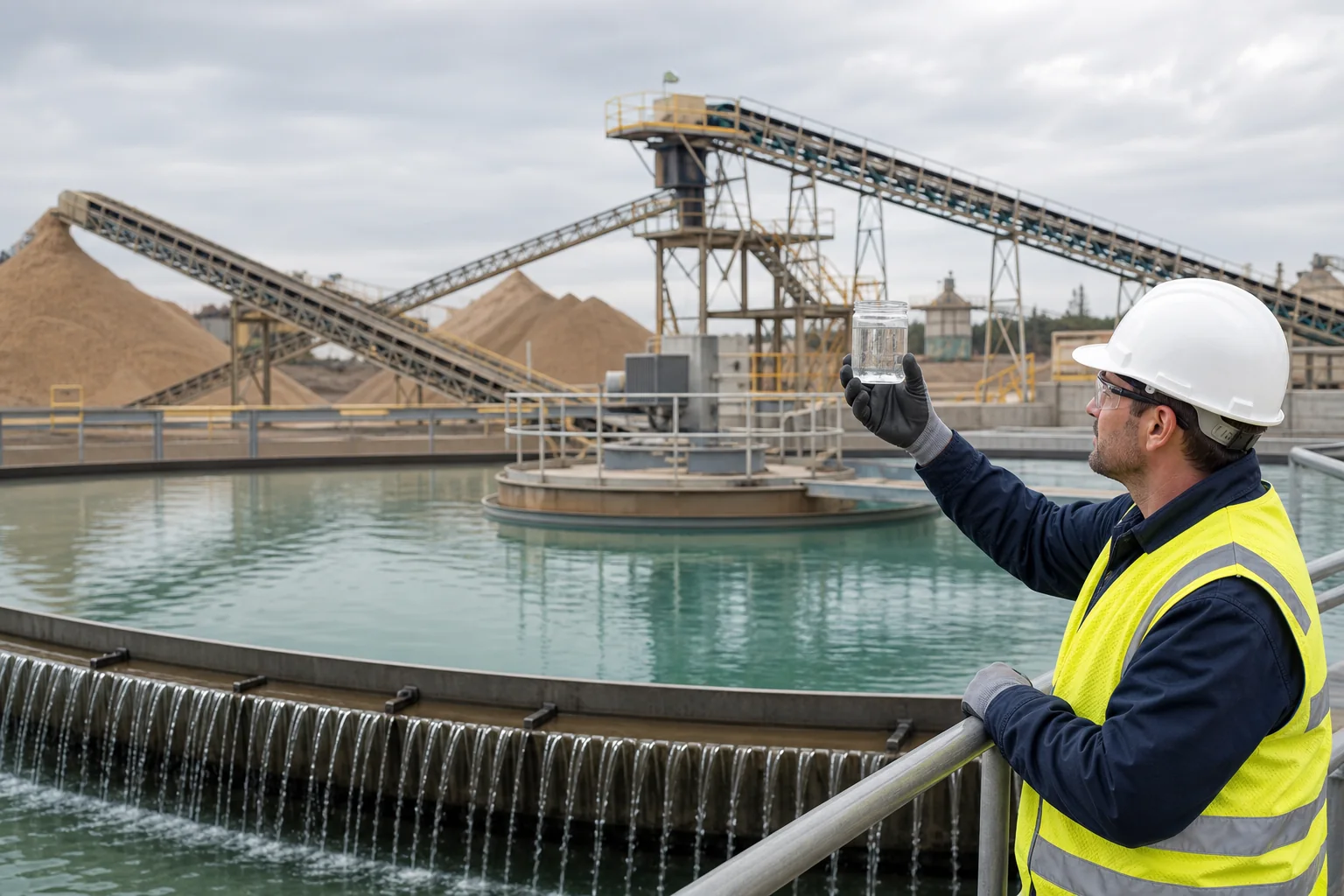
Limestone-washing fines can vary with the deposit, crushing and recycled-water circuit. Anionic PAM is a possible clarification candidate, but the stone name does not establish a universal product. Request samples for the actual fines and the installed water-recovery duty.
Document feed and recycle conditions
Record the washing stage, crusher contribution, fine or clay content, solids range and water measurements. Identify any upstream coagulant and the degree of recycling. A first-start sample in fresh water may not represent a circuit after normal accumulation. Explain which feed condition was sampled and whether another deposit or difficult fines period will occur during the intended supply period.
Assess clarity within available time
Compare candidates under a controlled preparation and dose method. Measure settling and fine-solids carryover within a practical separation time. A clear sample after a long quiet wait is not proof that a loaded clarifier can achieve the same result. The washing-water control guide links water measurements with solids loading, blanket stability and residence effects.
Check sludge withdrawal and pressing
Include settled-solids compaction, transfer and filter performance if the circuit presses the collected fines. More rapid capture can increase the burden on sludge withdrawal when that step is already limiting. Review filtration-grade criteria for filtrate, cake release and practical cycle performance. Do not select only the largest floc if it produces bulky or difficult material downstream.
Quote a performing grade and usable quantity
Retain candidate identity, preparation method, dose range and water condition with the accepted result. Estimate demand from actual flow or dry-solids loading on a stated basis. Confirm packaging suited to the feeder and protected storage. A lower bulk price is relevant only when the plant can prepare, use and store the qualified material. Recheck approval after a substantial deposit or circuit change.
Record the purchase decision
Complete the following checks with actual measurements, observations or an agreed document reference. Keep an untested condition visible as a limitation rather than assuming equivalence. The candidate code, sample identity and trial method must remain attached to the decision so purchasing and operations approve the same product and duty.
| Check | Evidence | Order decision |
|---|---|---|
| Feed envelope | Deposit/fines and recycled-water range | Trial includes normal operating variability |
| Clarifier | Settling time and overflow evidence | Result supports the available residence |
| Solids route | Withdrawal, transfer and filter result | Water recovery does not shift an unmeasured cost |
Send a useful sample and quotation enquiry
Provide limestone fines source, solids and clay observations, recycle-water data, clarifier and filter details. Include current grade and dose, water-recovery target and monthly demand range. State how the proposed packages will enter the installed preparation system.
Include quantity, packaging preference and destination separately from the technical approval. Use the anionic PAM sample worksheet to define the candidate screen and confirm quality documents and delivered supply scope for the selected identity. Gongyi Xinqi Polymer Co., Ltd. can review the requirements. Availability, commercial terms and application suitability require confirmation; a process name does not establish a universal dose or guaranteed operating result.
Request a focused sample review
Send solids, water, separator and purchasing requirements for this duty.