
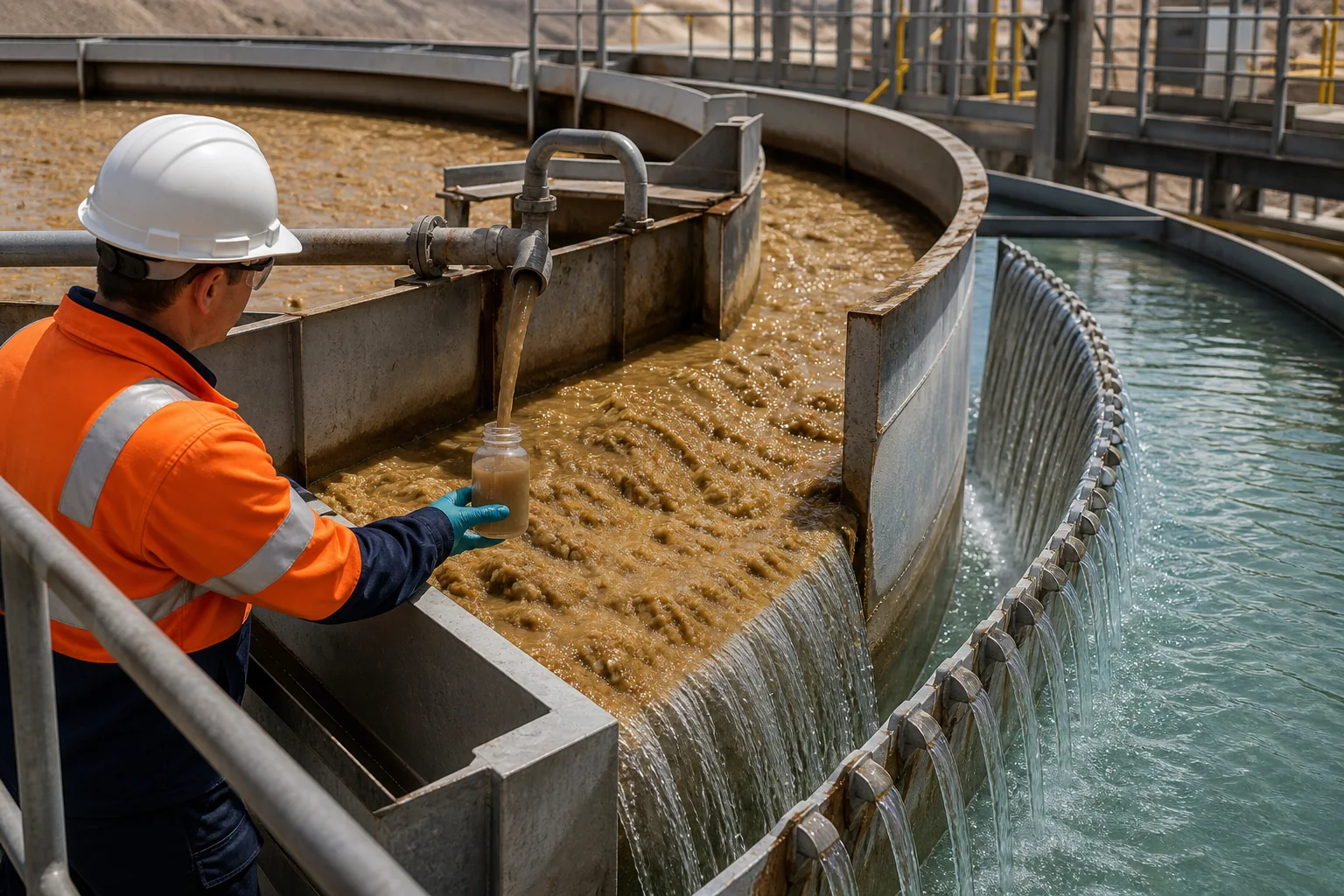
A coal-washing polymer purchase should identify which fines and slime stream needs treatment. Coal, mineral matter and clay proportions can change with the feed and separation circuit. Anionic PAM is a candidate family, not a guarantee that one powder code will clarify every coal-preparation water.
Define the slime stream and feed range
Identify the collection point, particle-size or fines information, solids concentration and normal feed changes. Record upstream reagents and recycled-water conditions. A sample from clear water or settled material may omit the fraction that controls the difficult duty. Explain how the sample represents the thickener or clarifier feed. Do not request a universal coal grade from one approximate solids value when clay and mineral contributions vary materially.
Compare settling and useful overflow
Test candidates against an identifiable reference using the same prepared solution conditions and dose basis. Measure settling, fine-solids carryover and compaction over an appropriate time. A fast initial interface can hide cloudy overflow or a difficult settled bed. The tailings settling method provides controls for splitting, timing and shear. Keep laboratory observations separate from a claim that the installed thickener will gain guaranteed capacity.
Include sludge or filter handling
Record underflow pumpability and the next separation step. If captured fines proceed to a filter, assess filtrate quality, cake release and the practical cycle rather than assuming that the clarification optimum is also the filtration optimum. Review filtration-grade acceptance where that duty applies. Excessively bulky or sticky residuals can shift the cost downstream even when recovered water appears improved.
Purchase against a qualified operating window
Estimate consumption from measured loading and a stated active or as-supplied dose basis. Preserve the tested feed and recycle-water range, preparation procedure and approved product identity. Ask for documents and supply scope for that candidate rather than an interchangeable coal-washing description. A later feed campaign or major water change should trigger review of the qualification, not an automatic increase in dose or an unrecorded supplier substitution.
Record the purchase decision
Complete the following checks with actual measurements, observations or an agreed document reference. Keep an untested condition visible as a limitation rather than assuming equivalence. The candidate code, sample identity and trial method must remain attached to the decision so purchasing and operations approve the same product and duty.
| Check | Evidence | Order decision |
|---|---|---|
| Feed | Slime source, fines and water range | Trial represents the intended coal circuit |
| Separation | Overflow, compaction and relevant filter result | Selection balances water and solids handling |
| Order identity | Approved code and verified dose basis | Quotation refers to the qualified material |
Send a useful sample and quotation enquiry
Send coal-slime origin, mineral or clay observations, solids range, recycle-water data, upstream reagents and equipment. Include current polymer, actual dose, overflow target and the route of separated fines. Identify which feed campaigns were tested and the expected consumption period.
Include quantity, packaging preference and destination separately from the technical approval. Use the anionic PAM sample worksheet to define the candidate screen and confirm quality documents and delivered supply scope for the selected identity. Gongyi Xinqi Polymer Co., Ltd. can review the requirements. Availability, commercial terms and application suitability require confirmation; a process name does not establish a universal dose or guaranteed operating result.
Request a focused sample review
Send solids, water, separator and purchasing requirements for this duty.