
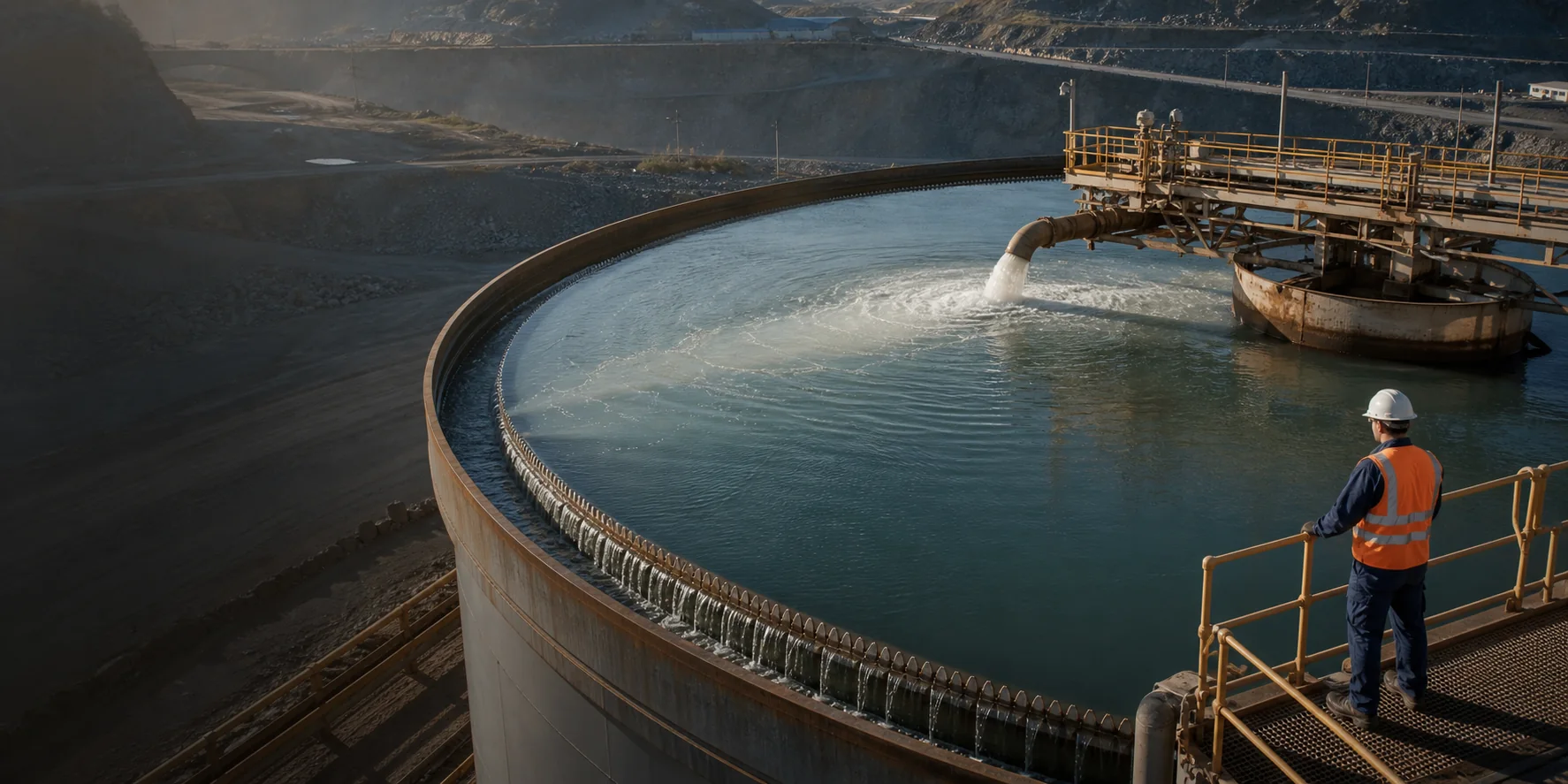
Gold-tailings flocculant procurement should identify the actual solids-separation stage and chemistry. A product that settles one tailings sample cannot be assumed suitable for every ore or treatment route. Polymer qualification does not replace controls for dissolved constituents or the site’s sampling and handling procedures.
State the tailings stage and relevant chemistry
Describe the process point, solids concentration, fines or clay fraction and water condition. Identify residual reagents to the extent needed for candidate review, without sending unnecessary confidential data. Sampling and transport must follow the site’s authorized procedure for the material. Do not use a convenient untreated sample to represent a stream that has undergone a different upstream process. The comparison needs the actual intended flocculation condition.
Hold upstream treatment constant
Prepare candidate solutions consistently and compare them on the same representative feed. Keep relevant upstream chemistry fixed during the first polymer screen. Assess a dose range rather than one arbitrary mass addition. The controlled settling method provides the framework. If another treatment step changes during the test, document it instead of attributing the whole result to the polymer grade.
Judge water and underflow together
Record settling, overflow solids, compaction and the practical underflow route. Use plant evidence for feedwell, bed, rake and pumping behaviour where relevant. Clear-looking overflow is not proof that dissolved constituents meet a reuse or discharge objective. State the analytical and operating endpoints agreed by the plant. The thickening product path keeps the complete solids-separation balance visible.
Limit purchasing approval to demonstrated conditions
Attach the tested product identity and preparation method to the approved feed range. Ask for the selected grade’s documents and commercial supply details, not an undefined mining substitute. Include a representative difficult ore condition where the purchase period requires it. Do not claim guaranteed ore recovery, contaminant destruction or safe tailings disposal from a flocculation result; those questions require separate process and engineering evidence.
Record the purchase decision
Complete the following checks with actual measurements, observations or an agreed document reference. Keep an untested condition visible as a limitation rather than assuming equivalence. The candidate code, sample identity and trial method must remain attached to the decision so purchasing and operations approve the same product and duty.
| Check | Evidence | Order decision |
|---|---|---|
| Stage identity | Process point, feed and upstream condition | Sample represents the intended treatment stage |
| Measured duty | Overflow, compaction and handling evidence | Approval is limited to solids separation |
| Order scope | Product identity and tested ore/water range | Shipment matches the qualified candidate |
Send a useful sample and quotation enquiry
Provide the tailings sampling point, relevant water and reagent information, solids range and separator. Include current product and measured dose, plus the overflow and underflow criteria used for acceptance. State any untested ore condition rather than implying that the application approval is universal.
Include quantity, packaging preference and destination separately from the technical approval. Use the anionic PAM sample worksheet to define the candidate screen and confirm quality documents and delivered supply scope for the selected identity. Gongyi Xinqi Polymer Co., Ltd. can review the requirements. Availability, commercial terms and application suitability require confirmation; a process name does not establish a universal dose or guaranteed operating result.
Request a focused sample review
Send solids, water, separator and purchasing requirements for this duty.